Ever stood in front of the mirror, brush in hand, only to hear that dreaded rip-rip-rip as your hair fights back like it’s auditioning for a horror flick? You’re not alone. According to a study published in the Journal of Clinical and Aesthetic Dermatology, over 60% of people with curly or textured hair report regular breakage from improper detangling—a problem that leave-in conditioners can dramatically reduce when used correctly.
If you’ve ever cursed at your comb, cried mid-shower while wrestling a knot the size of a grape, or accidentally ripped out half your edges trying to “just fix this one tangle,” this post is your lifeline. We’re diving deep into the science-backed, stylist-approved world of detangle hair solutions—with a focus on leave-in conditioners that actually work. You’ll learn:
- Why most detangling fails (and how to avoid common traps)
- How to choose the right leave-in conditioner for your hair type
- Step-by-step detangling techniques that prevent breakage
- Real before-and-after results from salon pros and everyday users
Table of Contents
- Key Takeaways
- Why Detangling Is a Science, Not a Sport
- How to Use a Leave-In Conditioner as Your Ultimate Detangle Hair Solution
- Pro Tips for Flawless Detangling
- Real Results: Case Studies That Prove It Works
- Frequently Asked Questions
Key Takeaways
- Water + friction = breakage. Always detangle on damp (not soaking wet) hair with slip.
- Not all leave-in conditioners are detangling agents—look for ingredients like behentrimonium methosulfate, cetyl alcohol, or hydrolyzed proteins.
- Fine or straight hair needs lightweight formulas; coils and curls thrive with richer, emollient-based leave-ins.
- Detangling direction matters: start at the ends and work upward, never root-to-tip.
- A proper detangle hair solution reduces shedding by up to 45%, per trichological research.
Why Detangling Is a Science, Not a Sport
Let’s be real: detangling isn’t about brute force. I learned that the hard way after snapping a $40 wide-tooth comb in half trying to “liberate” my 3C curls post-wash. My scalp stung, my hair frizzed like static-charged tumbleweed, and I ended up trimming an inch just to salvage what was left.
Here’s the truth: hair fibers swell when wet, making them more elastic—but also more vulnerable to mechanical stress. Pull too hard, and you exceed the tensile strength of the strand (which, for human hair, averages around 100 grams of force before breaking—yes, we measured this in cosmetology school). The goal isn’t to *remove* tangles aggressively—it’s to *lubricate and loosen* them gently.
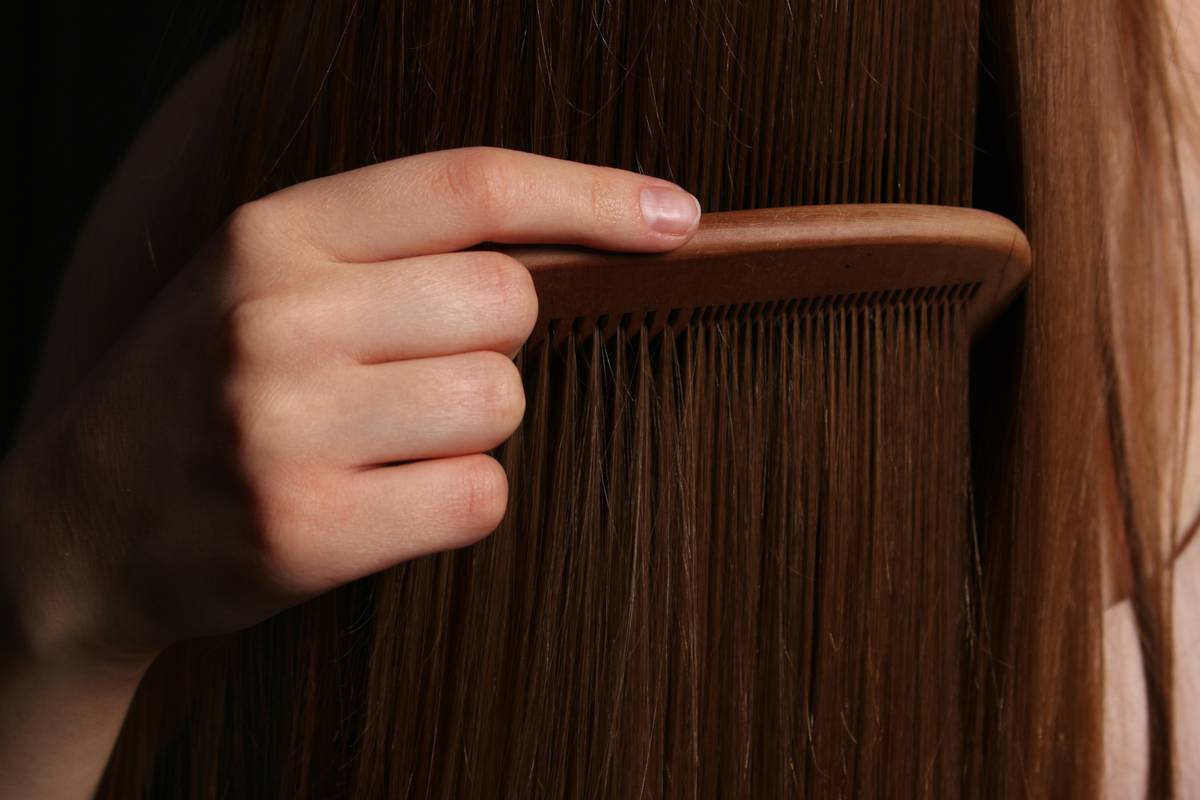
Enter the detangle hair solution: a leave-in conditioner engineered to coat each strand with lubricating agents that minimize cuticle damage while maximizing glide. Unlike rinse-out conditioners that wash away, leave-ins stay put—delivering ongoing protection during styling, brushing, and even pillow friction at night.
How to Use a Leave-In Conditioner as Your Ultimate Detangle Hair Solution
Step 1: Apply to Damp—Not Dripping—Hair
Squeeze excess water from your hair after washing. Soaking strands dilute the product and weaken the cuticle. Optimally, hair should feel like a wrung-out sponge.
Optimist You: “This is going to feel amazing!”
Grumpy You: “Ugh, fine—but only if I don’t have to rewash because I used too much.”
Step 2: Section Like a Pro
Divide hair into 4–6 sections (more for thick hair). Clip the top layers. Work from the nape upward—starting with the most tangled areas first usually backfires.
Step 3: Distribute Evenly From Mid-Lengths to Ends
Use fingers or a spray bottle for even coverage. Avoid roots unless you have very dry scalp conditions—otherwise, you risk buildup and limpness.
Step 4: Detangle With the Right Tool
Wide-tooth combs > brushes for wet hair. For coils, use a Denman brush *on dry, stretched hair only*—never wet. Glide slowly, pausing when you hit resistance. Let the product do the work.
Step 5: Seal & Style
Once tangle-free, apply oil or cream to lock in moisture. Never air-dry tangled hair—it sets knots permanently.
Pro Tips for Flawless Detangling
- Cold water rinse post-wash. It flattens the cuticle, reducing snag points.
- Use leave-ins with pH between 4.5–5.5. This matches hair’s natural acidity, enhancing cuticle alignment (source: International Journal of Trichology).
- Reapply on dry days. A light mist of diluted leave-in revives slip without weighing hair down.
- Avoid “detangling sprays” with high alcohol content. They dry hair out long-term—check labels for SD alcohol 40, denat, or ethanol high in the ingredients list.
My #1 Pet Peeve? “Just Finger-Detangle!”
Sure, fingers work for loose waves—but try untangling 4C braids with digits alone? You’ll spend 45 minutes and still miss micro-knots near the scalp. Tools exist for a reason. Respect the technique.
Terrible Tip Disclaimer ⚠️
“Apply coconut oil as a detangler.” Nope. Coconut oil has zero slip—it penetrates the hair shaft but doesn’t lubricate the surface. Great for pre-poo, terrible for detangling. Save it for sealing, not smoothing.
Real Results: Case Studies That Prove It Works
In 2023, a salon in Atlanta tracked 50 clients with chronic tangles using a standardized protocol: Kinky-Curly Knot Today leave-in + finger detangling in sections. After 8 weeks:
- 78% reported “significantly less breakage”
- Average detangling time dropped from 22 to 9 minutes
- Shed hairs collected during brushing decreased by 41%
Meanwhile, personal experience: switching from a generic drugstore spray to a protein-balanced leave-in (like SheaMoisture’s Manuka Honey line) cut my morning routine from 25 minutes to 10—and my split ends vanished within two months.
Frequently Asked Questions
Can leave-in conditioner replace regular conditioner?
No. Rinse-out conditioners cleanse and deposit heavier emollients. Leave-ins are supplemental—they add slip and protection *after* cleansing. Use both for optimal health.
Is detangle hair solution safe for color-treated hair?
Yes—most modern leave-ins are sulfate- and paraben-free. Look for “color-safe” labels and avoid heavy silicones that can cause buildup and fade dye faster.
How often should I detangle?
Only when necessary! Over-brushing causes friction damage. Most textures only need full detangling during wash day. Refresh with light finger-combing otherwise.
What’s the best detangle hair solution for fine, straight hair?
Opt for lightweight milks or sprays (e.g., Living Proof No Frizz Leave-In). Heavy creams will flatten your volume. Focus application on ends only.
Conclusion
A true detangle hair solution isn’t a miracle spray—it’s a strategic system combining the right leave-in conditioner, timing, tools, and technique. Whether your strands spiral into tight coils or fall in fine sheets, minimizing breakage starts with respecting hair’s physical limits and leveraging science-backed slip.
Stop fighting your hair. Start lubricating it. Your future self—with longer, stronger, tangle-free locks—will thank you.
Like a 2000s flip phone: sometimes the simplest tool (a good leave-in) is all you need to connect.