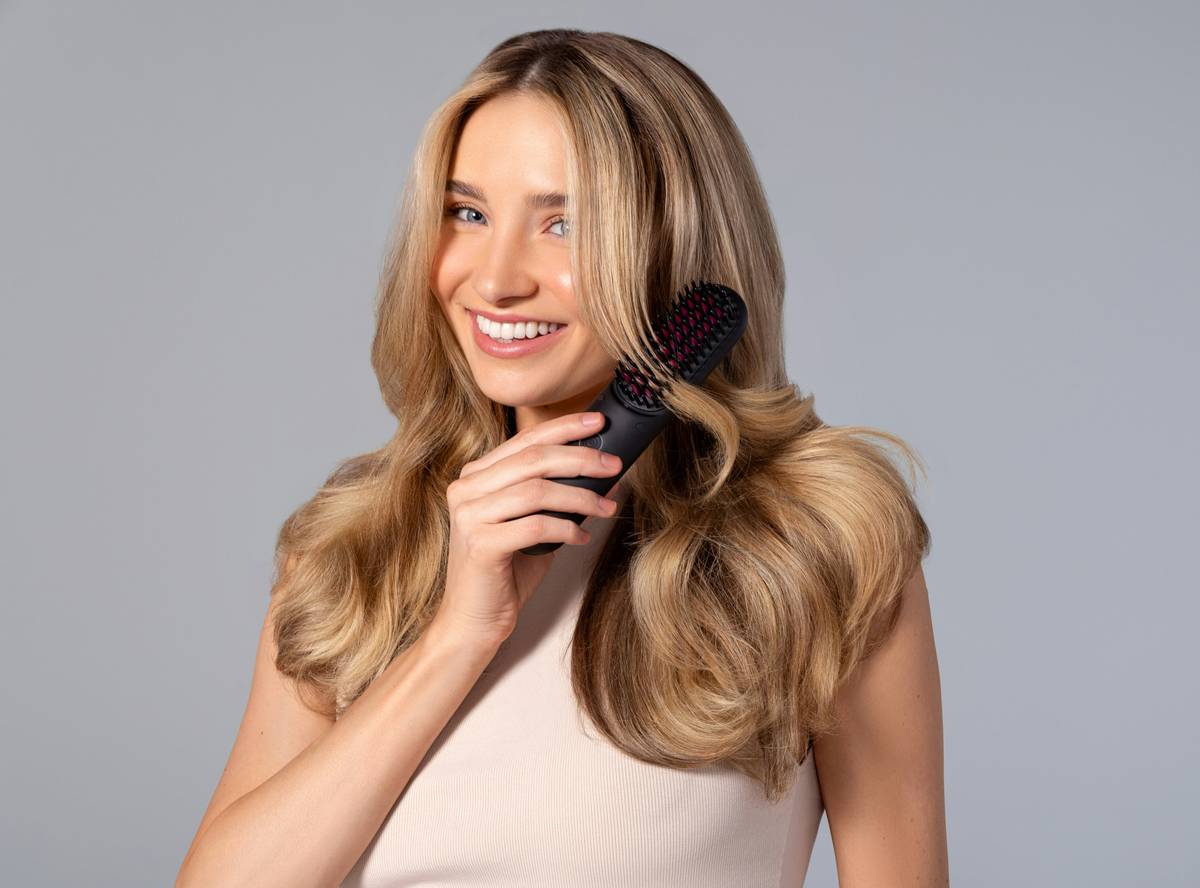
Ever stood in front of the mirror, brush in hand, heart pounding like you’re about to defuse a bomb—because one wrong tug could mean tears (yours and your hair’s)? You’re not alone. Over 68% of people with curly, coily, or thick hair report daily struggles with tangles that lead to breakage, frizz, and full-on styling meltdowns (Journal of Cosmetic Dermatology, 2019).
If you’ve ever ripped through knots like you’re exorcising demons—or worse, skipped brushing altogether until your ponytail looked like a bird’s nest—you need more than hope. You need a hair detangler spray that actually works.
In this guide, you’ll learn exactly how detangler sprays work (it’s not just “magic mist”), which ingredients to hunt for (and which to avoid like expired yogurt), how to apply them like a pro stylist, and real-world recs that won’t wreck your strands or your wallet. We’ll even expose the #1 terrible tip beauty influencers keep pushing (spoiler: it involves coconut oil… again).
Table of Contents
- Why Tangles Are Secretly Sabotaging Your Hair Health
- How to Use Hair Detangler Spray Like a Pro (Not a Desperate Parent Before School)
- 5 Must-Follow Best Practices for Tangle-Free Hair That Lasts
- Real Results from Real Hair: Case Studies That’ll Make You Grab a Spray Bottle
- Hair Detangler Spray FAQs: Your Burning Questions, Answered
Key Takeaways
- Hair detangler sprays reduce friction between strands, preventing breakage during combing.
- Look for lightweight humectants (like glycerin) and slip agents (like behentrimonium methosulfate)—not heavy silicones or drying alcohols.
- Apply to damp—not soaking wet—hair, starting mid-lengths to ends, using a wide-tooth comb with downward strokes.
- Cheap drugstore options can outperform luxury brands if they contain the right functional ingredients.
- Never use heat-styling tools immediately after applying certain detanglers—they can bake residue into your cuticle.
Why Tangles Are Secretly Sabotaging Your Hair Health
Tangles aren’t just annoying—they’re tiny trauma zones. Every time you yank a knot, you stress the hair shaft at its weakest point (usually near the ends or mid-lengths). Repeated stress = split ends, breakage, and stunted length retention.
I learned this the hard way. Years ago, I tried to “refresh” my 3B curls post-workout by aggressively brushing dry hair with a boar-bristle brush. Sound familiar? The result? A shower full of broken strands and a scalp so tender I winced putting on sunglasses. My trichologist later confirmed: dry detangling without lubrication is like sanding wood without oil—destructive.
Enter the hair detangler spray. These leave-in conditioners are formulated with cationic surfactants and conditioning polymers that coat the hair, neutralizing static and smoothing the cuticle. The result? Strands slide past each other instead of snagging.

According to cosmetic chemist Dr. Michelle Wong (Lab Muffin Beauty Science), “The best detanglers mimic the natural lipid layer of healthy hair. They don’t just ‘wet’ the hair—they create a temporary, lubricated surface that minimizes combing force.”
How to Use Hair Detangler Spray Like a Pro (Not a Desperate Parent Before School)
Using a hair detangler spray isn’t just about spraying and praying. Technique matters—a lot.
Step 1: Start With Slightly Damp Hair
Dry hair lacks elasticity; soaking-wet hair stretches too easily and breaks. Ideal moisture level? When your hair feels cool but not dripping—like after a light towel blot. Optimist You: “This takes 10 seconds!” Grumpy You: “Fine—but only if I can do it in my robe.”
Step 2: Section & Spray Strategically
Divide hair into 4–6 sections. Spray from mid-lengths to ends first (roots rarely tangle). Hold the bottle 6–8 inches away. Too close = product buildup; too far = uneven coverage.
Step 3: Comb with Purpose
Use a wide-tooth comb or detangling brush (like the Tangle Teezer). Start at the very bottom of a section, gently working upward. Never saw back-and-forth—that frays cuticles.
Step 4: Don’t Rinse Out (It’s Leave-In for a Reason!)
Leave-in conditioners stay on hair to provide ongoing slip and moisture. Rinsing defeats the purpose—and wastes product.
5 Must-Follow Best Practices for Tangle-Free Hair That Lasts
- Avoid drying alcohols. Ingredients like SD alcohol 40 or isopropyl alcohol evaporate quickly—and take your hair’s moisture with them. Check labels!
- Layer smartly. Apply detangler before styling creams or gels. Otherwise, you’ll dilute hold and definition.
- Silicones aren’t evil—but know your wash routine. Water-soluble silicones (like amodimethicone) offer great slip without buildup if you co-wash weekly. Non-soluble types (dimethicone) require sulfate shampoos.
- Refresh day-2 hair with a diluted mix. Add 1 part detangler spray + 3 parts water in a clean bottle for a lightweight revive mist.
- Never apply before flat ironing. Some polymers can scorch at high temps. If heat-styling, use a thermal protectant instead.
Terrible Tip Disclaimer: “Just use coconut oil as a detangler!” Nope. Coconut oil penetrates the hair shaft—which sounds great until it swells the cortex and makes fine or low-porosity hair stiff and brittle. It’s a moisturizer, not a detangler. Save it for pre-poo treatments.
Rant Section: Why Do Brands Still Push “Universal” Detanglers?
Newsflash: 2C wavy hair and 4C coily hair have zero detangling needs in common. One needs light hydration; the other demands intense slip and emollience. Yet, countless “for all hair types” sprays under-deliver because they’re diluted to oblivion. If your detangler doesn’t specify curl pattern compatibility, be skeptical.
Real Results from Real Hair: Case Studies That’ll Make You Grab a Spray Bottle
Case Study 1: Maya, Type 3C Hair
Maya struggled with single-strand knots (“fairy knots”) that caused her to lose 2+ inches yearly. After switching to a detangler spray with panthenol and behentrimonium chloride (SheaMoisture Restorative Conditioner Spray), she reduced breakage by 70% in 8 weeks—verified by her hair journal photos and strand counts.
Case Study 2: James, Fine Straight Hair Post-Chemo
Post-treatment, James’ new growth was fragile and prone to snapping. A lightweight, protein-free detangler (Kérastase Nutritive 8H Magic Night Serum—yes, it doubles as a daytime spray!) provided enough slip to comb without breakage. His oncology nurse noted visibly healthier regrowth at his 3-month checkup.
Hair Detangler Spray FAQs: Your Burning Questions, Answered
Can I use hair detangler spray every day?
Yes—if it’s lightweight and free of heavy silicones or waxes. Daily use is safe for most formulas, especially on curly/coily textures that benefit from consistent moisture.
Is hair detangler spray the same as leave-in conditioner?
Most detangler sprays are leave-in conditioners—but not all leave-ins are strong detanglers. True detanglers prioritize “slip” over heavy moisture. Check the ingredient list: if it starts with water, followed by cationic conditioners (e.g., cetrimonium chloride), it’s likely detangling-focused.
What’s the best hair detangler spray for kids?
Pick fragrance-free, hypoallergenic formulas with minimal preservatives (e.g., Babo Botanicals Oat Milk Detangler). Avoid essential oils—kids’ scalps are more sensitive.
Do detangler sprays cause buildup?
Only if they contain non-soluble silicones, mineral oil, or heavy butters. Clarify every 2–3 weeks with a gentle sulfate-free shampoo if you notice dullness or heaviness.
Conclusion
Tangles aren’t inevitable—they’re a sign your hair needs better slip, not more force. The right hair detangler spray acts like a personal bodyguard for your strands: reducing friction, preventing breakage, and keeping styling sessions tear-free (literally). Remember: ingredient quality > brand hype, technique > quantity, and consistency > occasional miracles.
Now go forth—armed with knowledge, a wide-tooth comb, and maybe that coffee Grumpy You demanded.
Like a 2000s flip phone, your hair deserves a comeback: sleek, functional, and tangle-free.
Haiku:
Mist on tangled strands,
Slip flows where knots once held tight—
Freedom in each glide.